AI, Automation, and Freelancing in 2026: What Still Matters for Human Freelancers

Freelancing in 2026 looks very different from just a few years ago.
AI tools can write text, generate designs, analyze data, and even produce code. Automation is everywhere. Many freelancers worry that machines will replace them — or already have.
But the truth is more nuanced.
AI is changing how freelancing works, not eliminating the need for skilled human freelancers. Those who adapt are finding more opportunities, not fewer.
This article explains what still matters for freelancers in the age of AI — and how to stay relevant in 2026.
1. AI Changed Output, Not Ownership
AI can generate content, but it does not:
- Own responsibility
- Understand business context fully
- Communicate with clients
- Make judgment calls
Clients still hire freelancers because they want accountability.
A human freelancer:
- Understands goals
- Asks the right questions
- Adjusts based on feedback
- Takes responsibility for results
AI produces output.
Freelancers deliver outcomes.
2. Freelancers Who Use AI Have the Advantage
In 2026, avoiding AI is not a strength — it’s a weakness.
Successful freelancers use AI to:
- Speed up repetitive tasks
- Generate drafts
- Analyze information
- Improve productivity
But they don’t rely on AI blindly.
The most valuable freelancers:
- Use AI as a tool, not a replacement
- Apply human judgment on top of AI output
- Refine, verify, and contextualize results
Clients notice the difference.
3. Skills That Still Matter in 2026
Despite automation, some skills have become more valuable.
Human-centric skills:
- Clear communication
- Problem framing
- Decision-making
- Client understanding
- Ethical judgment
Hybrid skills:
- Editing AI-generated content
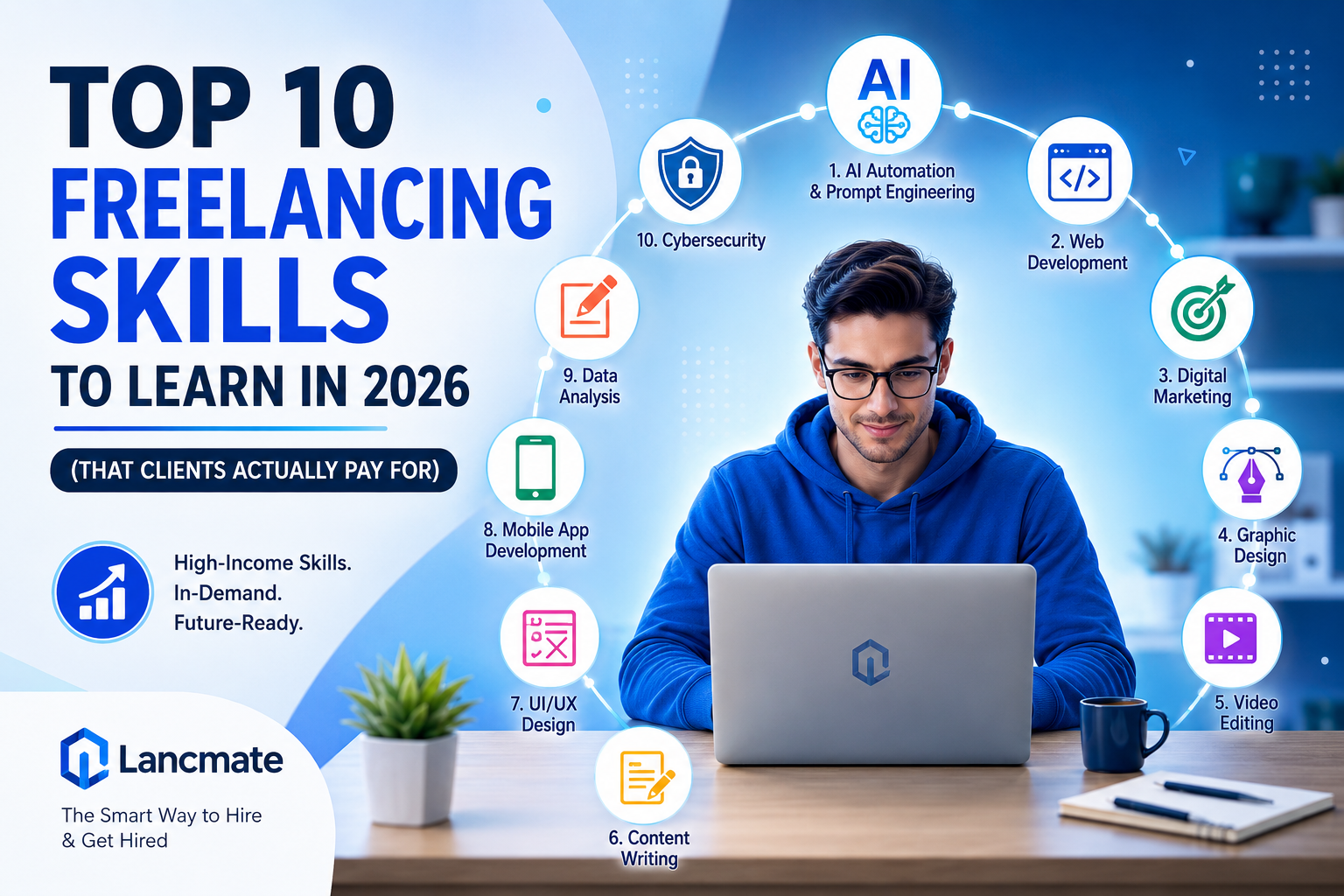
- Prompt engineering
- AI-assisted design and development
- Workflow automation
Freelancers who combine technical ability with human insight are harder to replace.
4. Why Generic Freelancing Is Declining
One of the biggest shifts in freelancing is the decline of “do-everything” freelancers.
Generic profiles struggle because:
- AI already covers generic tasks
- Clients want specialists
- Trust is built through clarity
Freelancers who define:
- One main skill
- One type of client
- One clear outcome
stand out more in 2026 than ever before.
5. Trust Is the Real Currency
As AI content becomes common, trust becomes rare.
Clients now look for:
- Clear explanations
- Transparent processes
- Real experience
- Consistent communication
Freelancers who explain how they work — not just what they deliver — build confidence.
Trust cannot be automated.
6. Pricing Is Shifting From Time to Value
Hourly work still exists, but value-based pricing is growing.
Clients care less about:
- How long something takes
And more about:
- What problem it solves
- What result it delivers
Freelancers who can define outcomes clearly are less affected by AI competition.
7. Continuous Learning Is No Longer Optional
In 2026, skills age quickly.
Good freelancers:
- Regularly update their tools
- Learn new workflows
- Experiment with AI responsibly
- Stay informed about industry changes
This doesn’t mean chasing trends — it means staying adaptable.
Final Thoughts
AI and automation are not the end of freelancing.
They are filtering the market.
Freelancers who rely on:
- Low effort
- Generic skills
- Minimal communication
will struggle.
Freelancers who focus on:
- Clear positioning
- Human judgment
- Smart use of AI
- Trust and reliability
will continue to grow.
The future of freelancing belongs to humans who work with machines — not against them.